
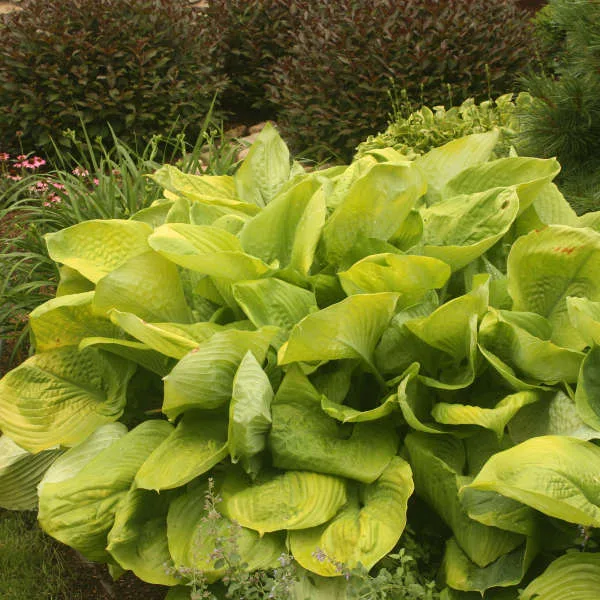
Hosta ‘Sum & Substance’
$28.99
Description
- One of the largest hostas available today, with 16″, broadly ovate leaves and a huge, mounded form
- Leaf color varies with the amount of available sun from light green to chartreuse to gold; prefers ¼-¾ day of sun
- Leaves are of good substance, corrugated, and glossy, giving them good slug resistance
- Pale lavender, bell-shaped flowers on 48″ scapes in mid to late summer
- Exhibits greater sun tolerance
Hostas are exceedingly popular perennials in today’s gardens due to their versatility in the landscape. Their subtle colors, tall flower scapes, and broad, coarse leaves fill a niche in garden designs that few other plants can achieve. Their large leaves provide excellent coverage for dying bulb foliage. Hostas also grow well in city environments where the air may be polluted by car exhaust, etc.
Photo courtesy of Walters Gardens, Inc
Additional information
| Weight | 0.000 oz |
|---|---|
| Container Size | |
| Latin Name | Hosta 'Sum and Substance' |
| Plant Type | Perennial |
| Care | Hostas grow best in moist, well-drained, highly organic soils with a pH between 5.5 and 7.5. Sandy loam is better than clay because it provides more aeration for the roots. |
| Light Requirements | |
| Habit | Mounded habit. |
| Plant Height | 48 inches |
| Plant Width | 72 inches |
| Foliage | Huge, heart-shaped, veined chartreuse leaves. |
| Bloom | Pale lavender flowers in July and August. |
| Zone | |
| Special Features | Attracts Hummingbirds, Black Walnut Tolerant, Cut/Dried Flower, Low Maintenance, Shade Tolerant, Slug Resistant, Supports Naturalizing, Tolerant of Wet Locations |
| Peak Season(s) |

Reviews
There are no reviews yet.